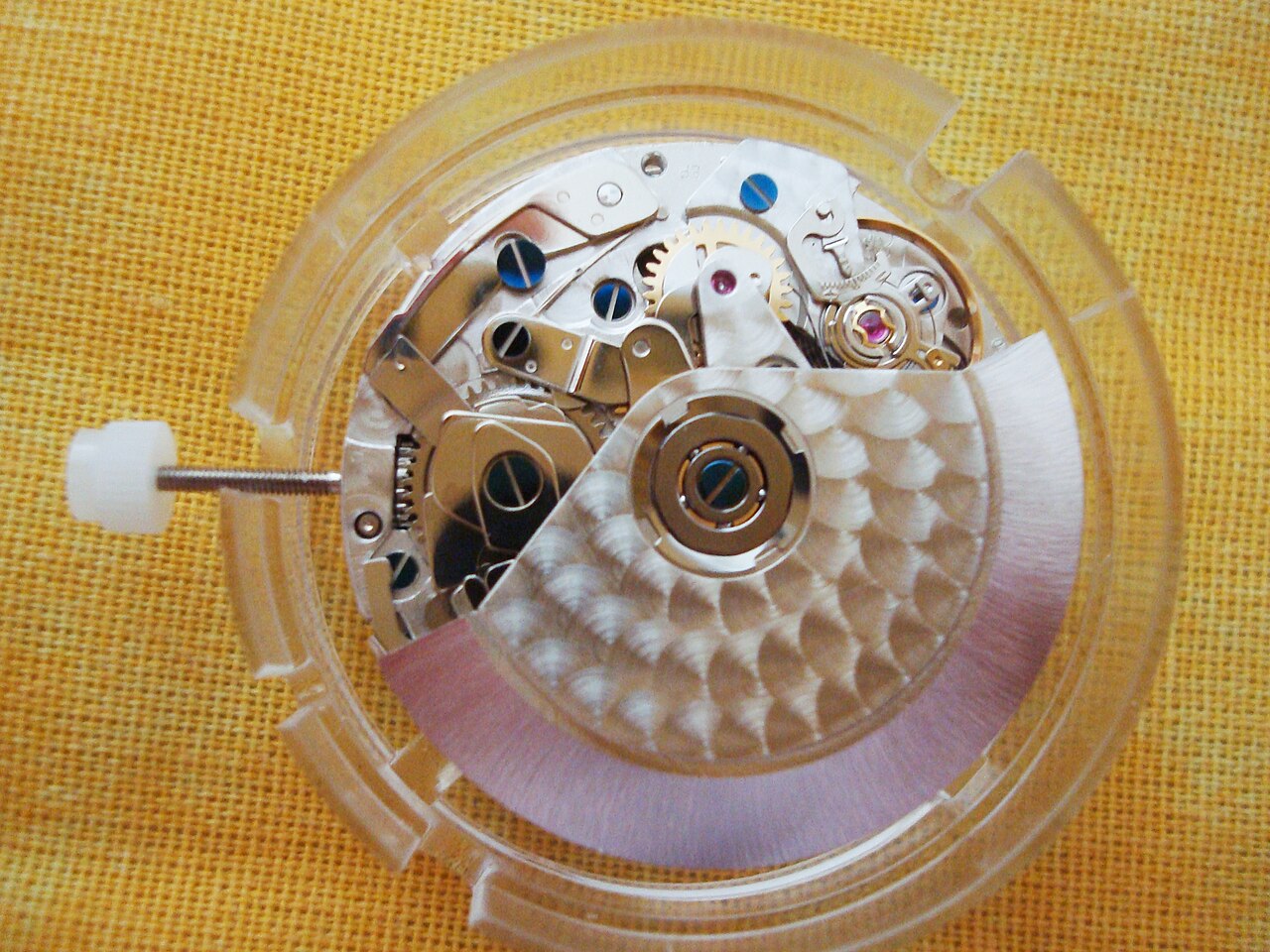
The most consequential decision in affordable Swiss watchmaking over the last twenty years was not made by a brand. It was made by a competition regulator, and most of the people affected by it have never heard of the case.
ETA, inside Swatch Group, had spent decades as the industry’s engine room — supplying mechanical movements to a very large share of Swiss watch brands, including direct competitors of the group that owned it. Swatch Group wanted to stop. The Swiss Competition Commission, which had to approve the withdrawal of a supply that much of the industry depended on, allowed it to happen gradually, in stages, over a period long enough for buyers to find alternatives.
That process reshaped the entire market beneath CHF 3,000. It is worth understanding properly, because the restriction it created is gone. The supply obligation ran out at the end of 2019, and in the summer of 2020 the Commission lifted what remained: ETA has been free to sell mechanical movements to whoever it likes ever since, bound only by the ordinary rule that a dominant supplier may not abuse its position. A great deal of strategy, and nearly all of the marketing, is still built on a shortage that ended before most of the watches now in the shops were designed.
What the squeeze actually did
Three things, in order.
It created Sellita. Sellita had spent years assembling movements for ETA under contract; it knew the designs intimately, and when the supply began closing it moved to producing its own equivalents once the relevant patents had lapsed. The SW200 and its relatives are close analogues of the ETA calibres they replaced, and they became the default engine of the independent Swiss watch. A supply restriction intended to protect one group’s advantage produced a competitor with a decade of manufacturing experience and a ready-made customer list.
It pushed brands to Japan. Miyota, inside Citizen, took a substantial share of everything that did not need to say “Swiss Made” on the dial. The microbrand boom of the 2010s runs almost entirely on Japanese movements, and it happened because Swiss ones stopped being reliably available at that price.
It forced the in-house programmes. Brands with the capital built or commissioned their own calibres. Those programmes were genuinely expensive and, in several cases, genuinely good. But it is worth being precise about the causation: many were not conceived because a brand had a movement it wanted to make. They were conceived because a brand had a supply it was about to lose.
The marketing that grew on top
Here is where it gets interesting, and where a piece of received wisdom deserves examining.
Over the same period, “in-house” hardened from a technical description into a marketing category — the word that separated serious watchmaking from assembly. Brands that had spent decades quite happily using ETA rebuilt their identities around no longer doing so. Using an outside movement went from ordinary to slightly embarrassing.
Notice the sequence. The industry did not decide that in-house movements were better and then stop buying from ETA. It was told it could no longer buy from ETA, and then decided that in-house movements were better. The marketing followed the supply constraint, and dressed a forced migration as a philosophical awakening.
This is not an argument that in-house movements are worthless. Vertical integration is real, controlling your own calibre genuinely affects what you can design and how you service it, and some of the movements built under that pressure are excellent. It is an argument that the hierarchy — in-house good, supplied movement inferior — was manufactured by a supply shock rather than discovered by watchmaking, and that a great many buyers have been sold a value judgement that started life as a logistics problem.
What changes if the tap reopens
The regulatory tap is already open. What is not established is whether ETA is pushing volume through it — that is a commercial decision, and Swatch Group has not announced one. If it does, several things follow.
It is a demand signal before it is a supply one. A components division that spent fifteen years reducing outside customers does not reverse without a reason, and the plain reading is that volumes are not what they were. A supplier looking for buyers tells you more about the state of the mid-market than any export release, because it is a company acting on its own numbers rather than commenting on someone else’s.
The economics under CHF 3,000 move. Sellita has enjoyed something close to a captive market, with pricing power that reflects it. Genuine ETA competition puts pressure on that, and every brand buying movements at that level gets a better position — a straightforward good for anyone building watches, and eventually for anyone buying them.
And some brands have an awkward decision. The uncomfortable question is simple: which of the companies that made a virtue of leaving ETA would quietly go back if the price were right? Some in-house calibres exist because a brand wanted them. Others exist because a brand had to have something, and are more expensive to build and harder to service than the supplied alternative they replaced. Those are not the same situation, and a reopening supply is exactly the pressure that would reveal which is which.
Watch what happens at the next model refresh, not what appears in the next press release.
What we can and cannot establish
The historical part of this is a matter of public record: the competition proceedings, the phased reduction, Sellita’s emergence, Miyota’s share of the microbrand market. Those can be checked.
One thing needs stating precisely, because an earlier draft of this piece leaned on it. The trade reporting that ETA wants volume customers again dates from August 2016. It is not a current event, and it was wrong to carry it as one. What is on the record is narrower and more useful: the obligation to supply expired at the end of 2019, COMCO lifted the remaining restrictions in the summer of 2020, and nothing has stopped ETA selling to anyone since. Whether it is actively courting volume customers today is a commercial question, and this piece does not assert an answer to it.
What is not in doubt is the shape of the thing. An industry that spent fifteen years building an identity around a shortage has an awkward identity once the shortage is lifted — and this one was lifted in 2020. The brands that will handle it best are the ones that were honest with themselves about why they built their own movement in the first place.
The line worth remembering
“In-house” was never a standard. It was a description that became a slogan because a supply line closed. That line has been open again since 2020, which means the slogan has been running without an argument behind it for six years — and the brands that only ever had the slogan are the ones to watch.