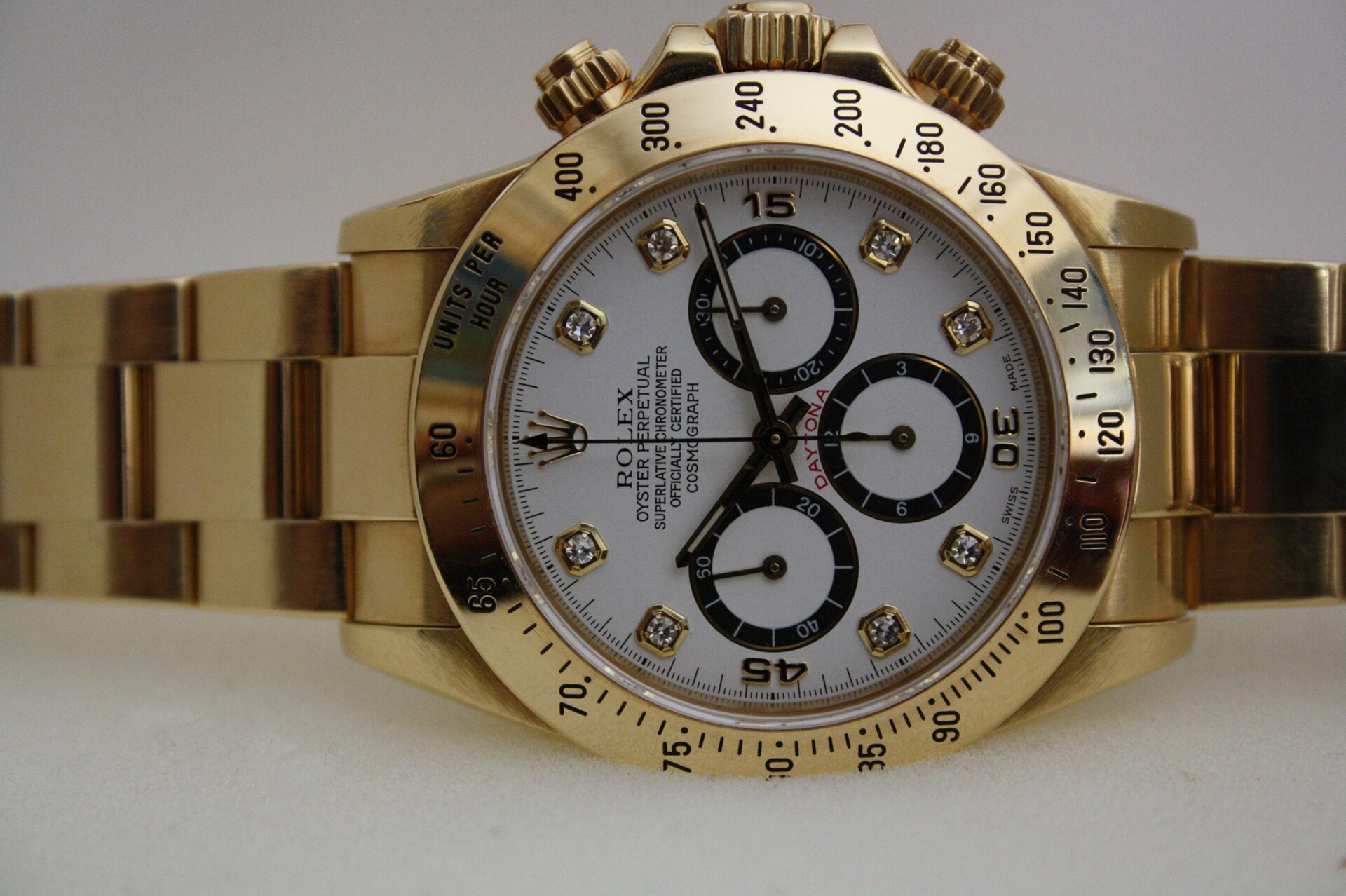
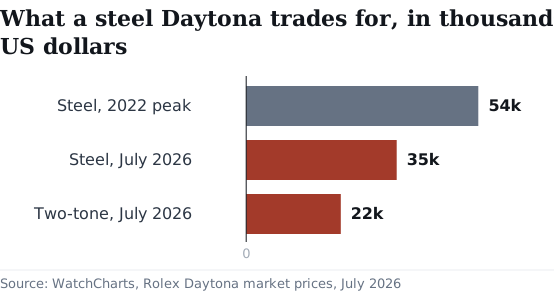
Start with one number: 51%. That’s roughly how far the steel Rolex Daytona has fallen from its 2022 secondary-market peak — from about $54,000 to the mid-$30,000s on WatchCharts’ July 2026 data. Two-tone Daytonas sit in the low $20,000s. Across the steel-sports category that defined the boom, premiums over retail have compressed from “life-changing” to “barely worth the listing fees” — and on plenty of references, to nothing at all.
The tempting reading is that this is a price story: bubble inflates, bubble deflates, prices normalise, everyone moves on. That reading misses what a grey premium actually is — and therefore what its disappearance actually means.
A premium is information
A secondary price above retail is one of the purest signals in the industry, because nobody can manufacture it. It says: the marginal buyer cannot get this watch through official channels and will pay real money to skip the queue. When that number was $38,000 on a single steel chronograph, it carried a second message: the marginal buyer isn’t buying a watch, they’re buying an asset — because no one pays a 250% markup for something they merely want to wear.
So when premiums collapse, the thing that has actually changed is the identity of the marginal buyer. The speculator — the buyer who was only there because the line went up — has left. What remains is closer to true wearer demand: people paying roughly what a watch is worth to them, not what they believe the next buyer will pay.
That is not a market getting weaker. It’s a market getting honest. But honesty has consequences.
Consequence one: the AD relationship just repriced
For a decade, the implicit deal at an authorised dealer was: buy things you don’t want, and eventually you’ll be offered the thing that’s worth more than you’ll pay for it. That deal only works while the last clause is true. With secondary premiums near zero on most references, purchase-history-building is now just… buying watches you don’t want. The currency of the relationship game has devalued, and the sales floor knows it before the clients do.
Consequence two: production plans built on 2021 are wrong
Brands scaled capacity, raised prices, and set retail ambitions against demand that included a heavy speculative component. The FHS first-half numbers show the aggregate result of that component leaving: export value slightly down, volumes up 2.3% but driven by sub-CHF 500 mechanicals — growth at precisely the end of the market that never had a grey premium to lose. The luxury middle, the CHF 3,000–10,000 steel-sports heartland where every brand launched a “waitlisted” integrated-bracelet watch after 2019, is where the honesty hurts most.
Consequence three: certified pre-owned looks prescient
When Rolex launched certified pre-owned, the cynical read was margin capture. The structural read looks better every quarter: with the premium gone, secondary is no longer a rival distribution channel bidding against retail — it’s just inventory, and whoever controls its certification controls its price floor. Expect every major brand to care much more about secondary infrastructure now that secondary no longer flatters them for free.
What it means if you’re buying
Three practical translations. If secondary sits below retail for a watch you want, the AD’s list is theatre — negotiate like it. If secondary sits at retail, you’re looking at genuine wearer demand; the watch is probably fairly priced and won’t punish you either way. And if a premium persists through this correction — as it does on a handful of references — that’s the market telling you scarcity there is real, not staged. There are far fewer of those than the last decade taught everyone to believe.
The bubble didn’t just deflate. It ran a census of who was actually in the room. The industry is still deciding whether to believe the results.