Here is a test you can run in thirty seconds on any brand’s website. Open the technical specifications for a watch you like. You will find the case diameter. You will find the thickness. You will usually find the lug width, the crystal material, the water resistance and the power reserve.
You will almost never find the lug-to-lug.
That is remarkable, because lug-to-lug is the measurement that determines whether the watch will fit you. Diameter is the one everybody publishes, everybody quotes, and everybody uses to decide — and on its own it tells you close to nothing.
What each number actually governs
Diameter is the width of the case across the middle, excluding the crown. It governs visual presence: how large the watch looks in a photograph and how much of your wrist it covers side to side. It does not govern fit, because a case does not sit on your wrist across its middle. It sits on the part that runs up your arm.
Lug-to-lug — sometimes written as case length — is the distance from the tip of the top lugs to the tip of the bottom lugs. This is the dimension that has to live within the flat of your wrist. Exceed it and the lug tips overhang the edge, the strap is forced to bend at a sharper angle than the case wants, and the watch rocks. No amount of strap adjustment fixes it, because the problem is geometric.
A 42mm watch with a 46mm lug span will sit better than a 39mm watch with a 50mm one. Nothing in the marketing for either watch tells you that.
Thickness is the one people regret ignoring. It governs whether a watch is comfortable over a whole day and whether it goes under a cuff. It is also the dimension most likely to make an otherwise well-proportioned watch unwearable, and — unlike diameter — you cannot get used to it. A thick watch stays thick.
Lug width governs only strap compatibility. It is a shopping detail, not a fit one.
Crown position and size matter more than the spec sheet suggests, particularly if your wrists are slim or you have a desk job: a large crown at three o’clock digs into the back of the hand. This is not a number at all, which is why it gets missed.
Why diameter became the published number
Two reasons, and only one of them is about you.
The honest one: diameter is genuinely the easiest dimension to describe and compare. It is a single number that sorts watches roughly by presence, and roughly is often enough to start a conversation.
The less honest one: diameter is the number that sells. Through the 2000s and into the 2010s, larger meant more substantial, more masculine, more expensive-looking, and the industry priced accordingly. Publishing the measurement that flatters the trend and omitting the one that reveals its cost is not a conspiracy — it is just what marketing departments do. But the effect is that buyers were handed a number that grows with the fashion and denied the one that would have told them the watch was too long for them.
The result is a decade of watches sold on a number that does not predict comfort, and a generation of buyers who concluded they “cannot wear 42mm” when what they could not wear was a particular set of lugs.
How to take the measurement that counts
Your wrist. Measure the flat width of the top of your wrist, not the circumference. Put a ruler across the back of your wrist where the watch would sit, from the outer edge of one side to the other. That figure — usually somewhere between 50mm and 65mm on adult wrists — is your working limit. Any watch whose lug-to-lug exceeds it will overhang.
Circumference matters for strap length and nothing else. It is the number most people know and the wrong one for this purpose.
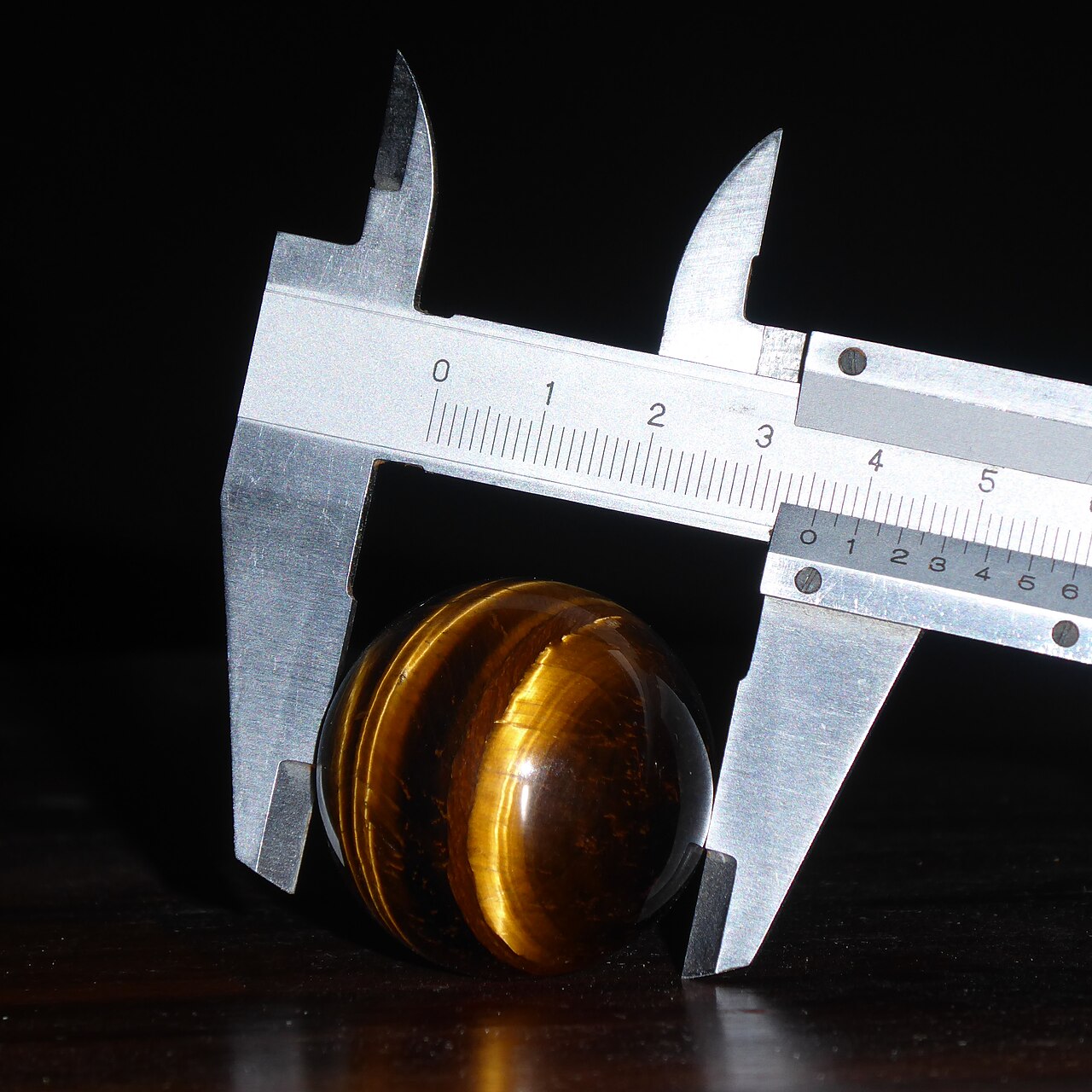
The watch. Since brands rarely publish it, you have three options: measure a physical example with calipers from lug tip to lug tip; find a specification from a reviewer or retailer who measured it, treating it as approximate unless they say how; or estimate from photographs, which is unreliable and should be a last resort.
The test that settles it. Wear it and look at your wrist from directly above. If you can see daylight under the lug tips, or if the lug tips sit past the edge of the flat, the watch is too long — regardless of what the diameter says and regardless of how good it looks head-on in a mirror.
What this changes when you buy
Three practical consequences.
A watch you dismissed on diameter may fit you perfectly. Dive watches in particular often carry short, steeply curved lugs that make a nominally large case wear far smaller than the number suggests.
A watch you assumed was safe may not be. Dress watches with long straight lugs, and vintage-styled pieces whose proportions were drawn for smaller cases, can push lug-to-lug well past what the diameter implies.
And when a specification is missing, that absence is information. A brand that publishes diameter and thickness but not case length has made a choice about which number it wants you to use. You do not have to accept it.
The short version
Measure the flat of your wrist. Treat that as a ceiling. Ask for lug-to-lug before you ask for diameter, and if the brand will not tell you, measure it yourself or find someone who did. Check thickness second, because it decides whether you keep wearing the thing.
Diameter is the number you will be given. The other two are the ones that decide whether the watch stays on your wrist.