Every profile in this series so far has orbited one question — what happens to an independent when its founder steps back. Journe answered it with Chanel equity and an admission. Büsser answered it structurally, by never making his hands the product. Akrivia hasn’t had to answer it yet, and is priced as though it never will.
Which brings us to the independent nobody writes think-pieces about — and the mildly embarrassing discovery, for the watch media including at times this corner of it, that the least dramatic brand in the category may have the most grown-up answer of all.
The anti-origin origin story
Laurent Ferrier’s founding myth refuses every convention of the genre. No young rebel storming out to overthrow the establishment: Ferrier — born 1946, third-generation watchmaker — spent thirty-seven years at Patek Philippe, much of it running technical development, and left at sixty-three to start his own house in 2009. The romantic subplot is real but understated even so: in 1979 he stood on the Le Mans podium, and his co-driver and friend from that racing life, François Servanin, became the company’s founding shareholder and president.
Read that structure against the field guide and notice what it quietly contains, from day one: outside capital from a patient partner rather than a founder mortgaged to his own order book; a founder who had already spent decades inside an institution learning how watchmaking survives beyond individuals; and — the part almost nobody discusses — the next generation already in the building, with Christian Ferrier working in the movement side of the house his father founded.
Journe brought in Chanel at sixty-one citing uncertain succession. Büsser sold 25% to secure continuity at twenty years in. Laurent Ferrier started with the structure the others retrofitted. It has never needed announcing, because it was never a crisis.
The product argument, briefly
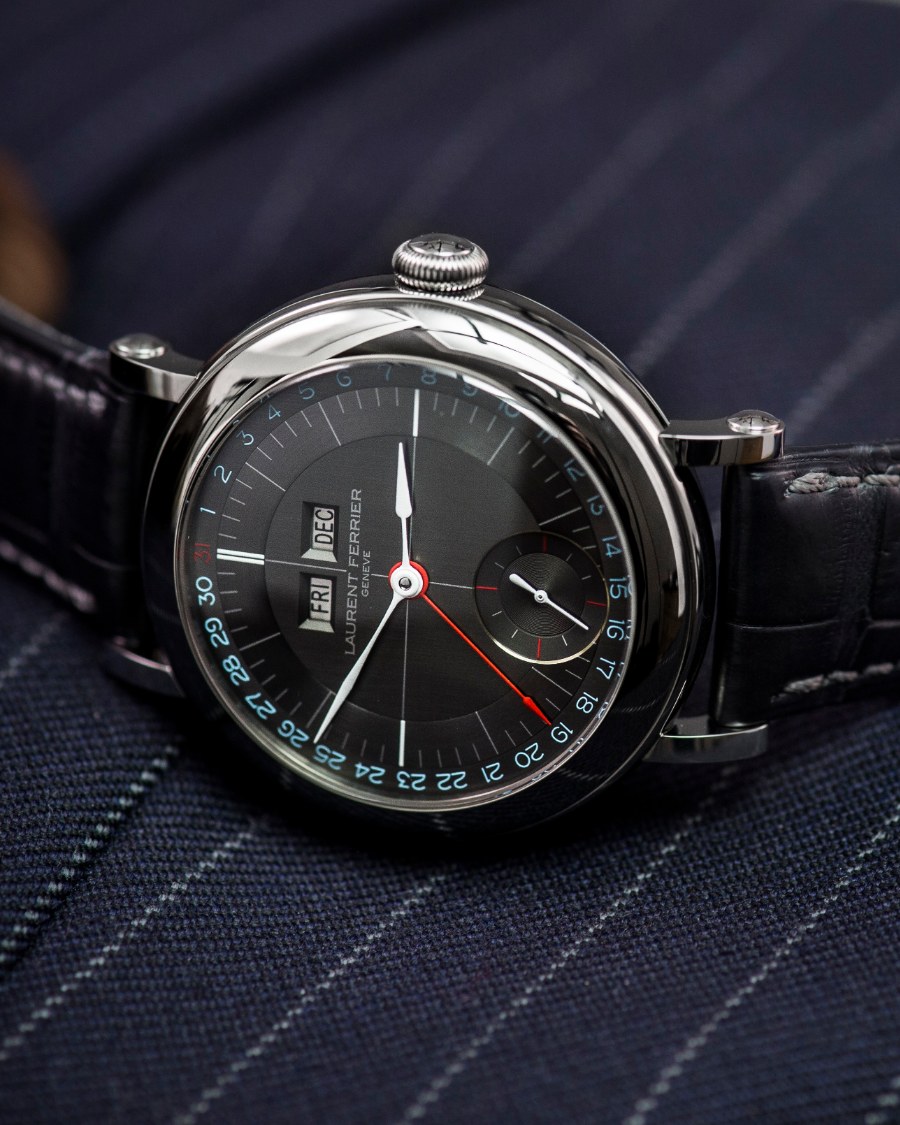
The watches make the same refusal of drama. The Galet — “pebble” — school-piece aesthetic; the natural-escapement chronometry obsession; finishing that watchmakers point other watchmakers toward. Output has grown from a boutique trickle to a reported few hundred pieces a year — meaningful scale for the category, achieved without a single manufactured-scarcity stunt, ballot, or “waitlist” press cycle. In an industry where the waiting list became a marketing product, Laurent Ferrier simply… sells watches to people who want them, at prices that undercut comparably finished competition.
This is, of course, exactly why the media ignores it. There is no feud, no records at Phillips, no $3.8 million steel lot. The auction market runs noticeably cooler on Laurent Ferrier than on Journe or Akrivia — and the reverence economy reads cool secondary prices as a verdict on quality. Our read is different: secondary heat, as we argued in the grey-market piece, measures speculative conviction, not finishing. A brand whose watches trade near their worth to wearers isn’t failing a test. It’s declining to sit it.
The honest counterweights
The field guide cuts both ways here too, and admiration shouldn’t blunt it:
- The founder is nearly eighty. The structure is sound, but the taste — the restraint that defines the product — is still Laurent Ferrier’s own. Institutional continuity secures the company; whether it secures the judgment is the same question Chanel will face at Journe, in gentler form.
- Classicism is a ceiling as well as a floor. The Galet will never look dated — and never trend. A brand that refuses heat also forgoes the compounding attention that funds manufacturing depth at rivals. Growth without drama is slower, permanently.
- A few hundred a year is the awkward middle. Too many for the mystique of thirty, too few for the economics of thousands. The M.A.D.-style funnel that solved this for MB&F would be unthinkable here — which means the middle is where this house has chosen to live, margin pressure and all.
What we’ll be watching
- The handover in plain sight. Christian Ferrier’s role, and how visibly the house lets the second generation’s name stand next to the first. This is the Daniels–Smith signal, running quietly in real time.
- Whether the majors come shopping. A classically styled, genuinely manufactured, succession-ready independent with no drama attached is precisely what a luxury group acquires. Servanin’s shareholding makes the question answerable in a way it isn’t at founder-controlled houses. The day an offer lands, this profile gets its sequel.
- Price discipline against the finishing. Laurent Ferrier’s value case rests on delivering top-tier finishing below the hype names’ prices. If the market ever repriced the brand to its craft, the quiet-giant era ends — pleasantly for early owners, awkwardly for the positioning.
Verdict
Watchlist — but let’s be precise about what that chip means here, because it isn’t a hedge. Journe is the standard-bearer with a question. MB&F is the structure with a fashion risk. Akrivia is the biography priced as an institution. Laurent Ferrier is the inverse of all three: an institution that the market still prices like a well-kept secret. In a series about which independents will exist in ten years, the least discussed name is the one we’d worry about least — and the one where the gap between reputation and reality runs, unusually for this industry, in the buyer’s favour.
Profile four concludes the opening arc of our independents series: F.P. Journe, MB&F, Akrivia, Laurent Ferrier. The lens stays the same from here — one atelier at a time.